



















































































































































































|
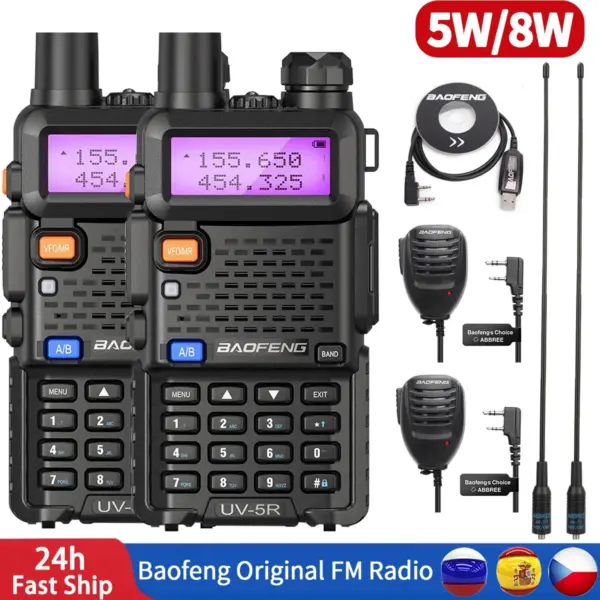
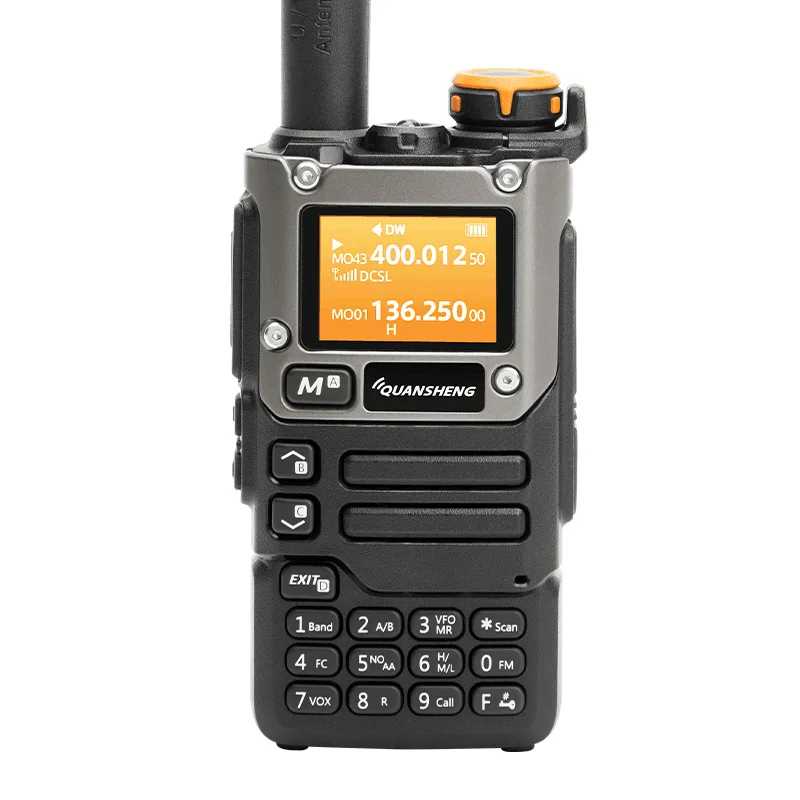
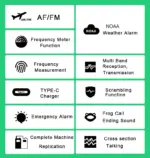
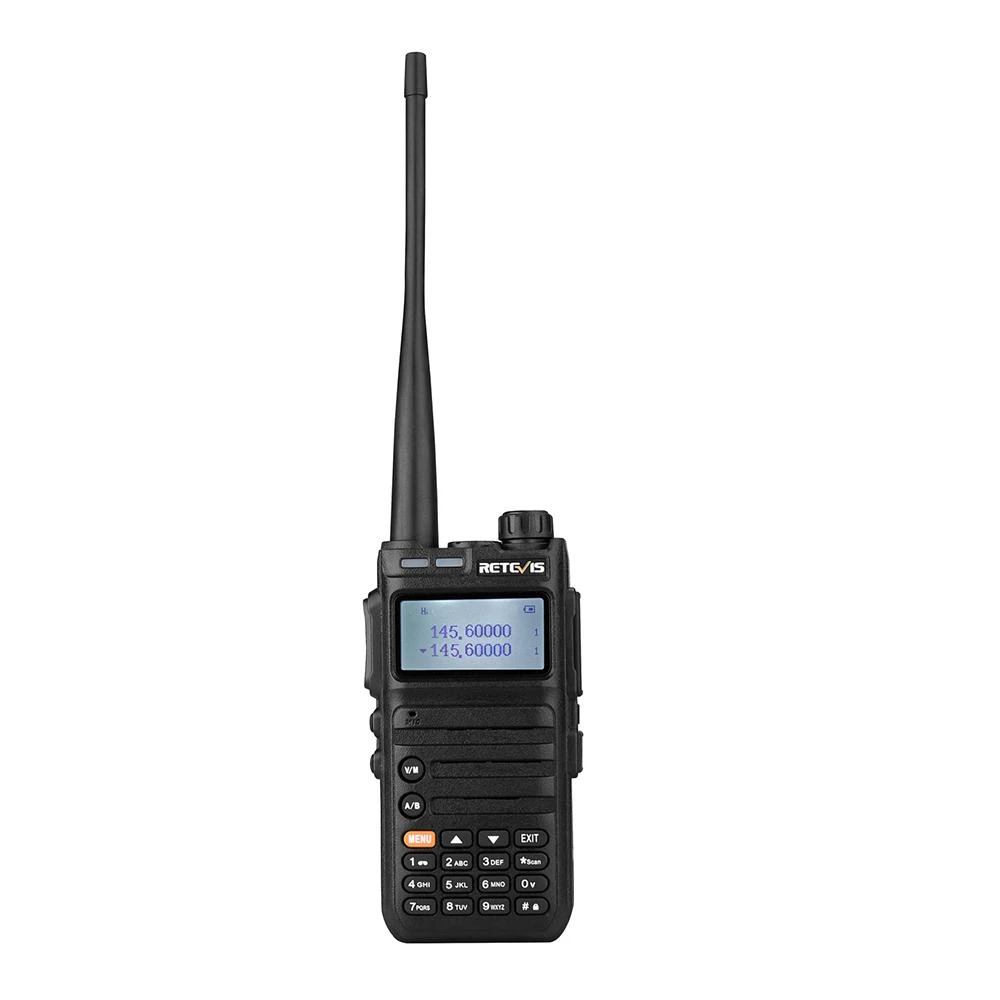
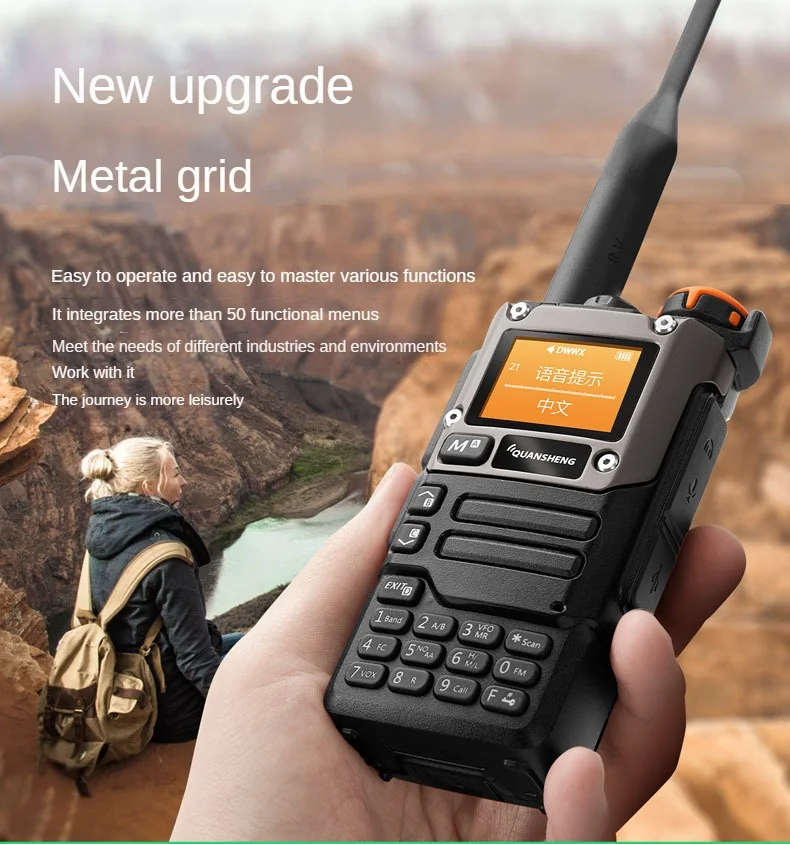
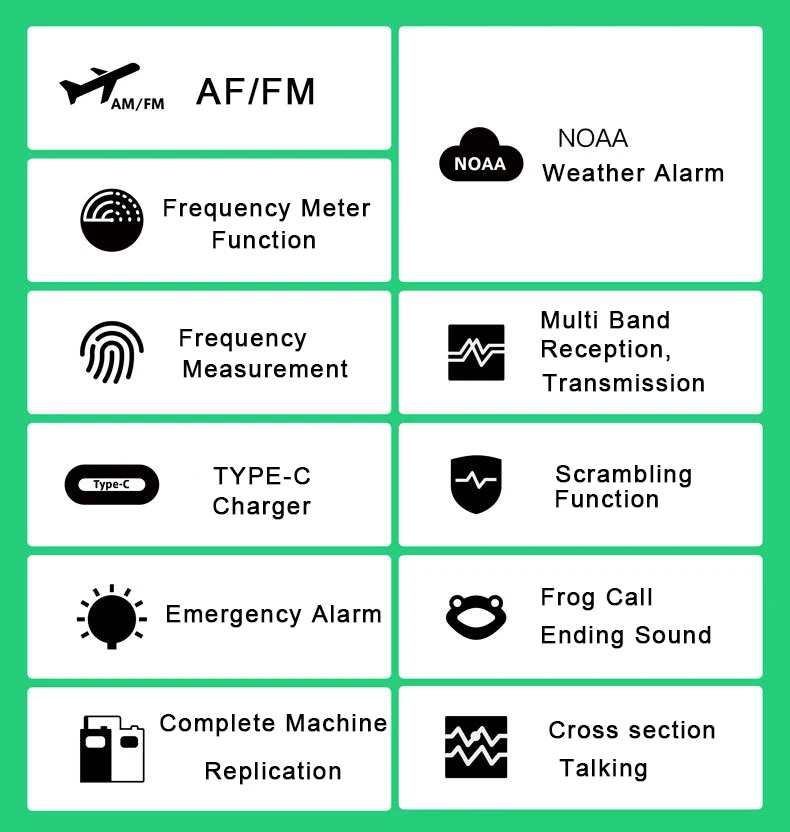
Product features |
||
|
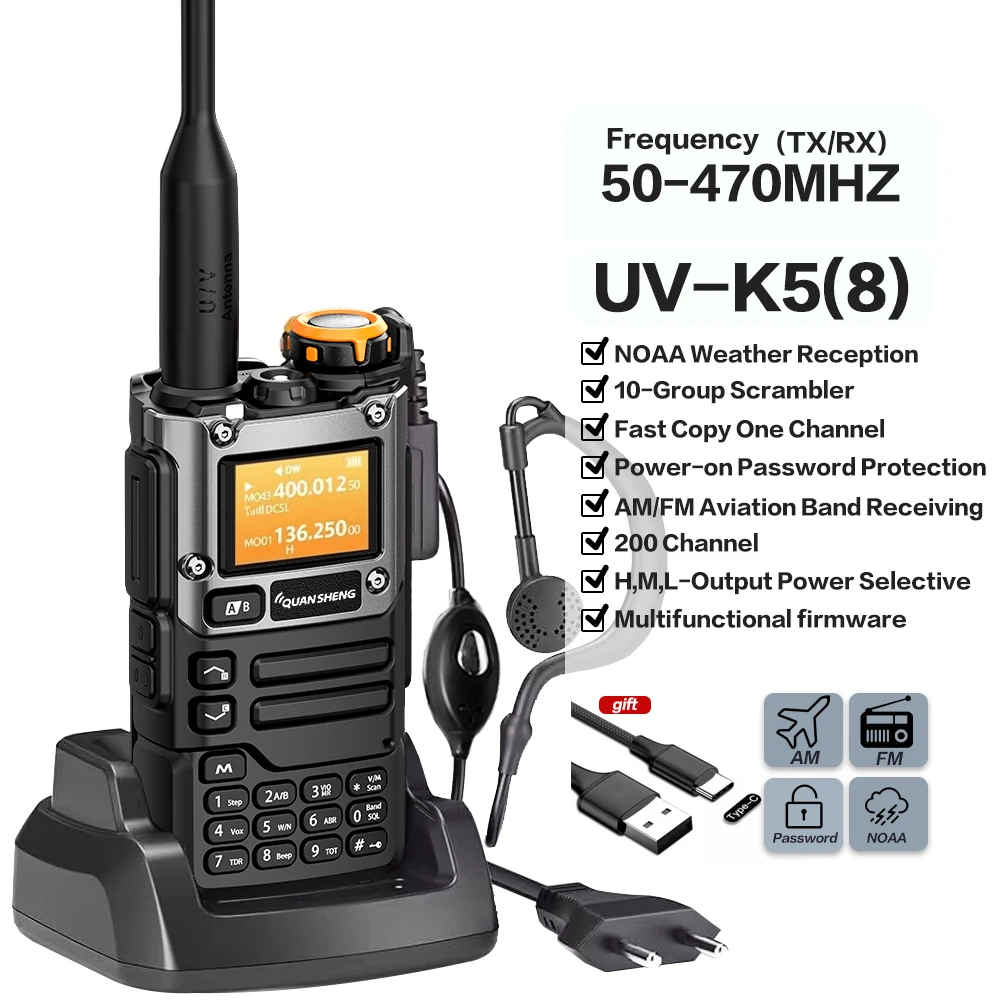
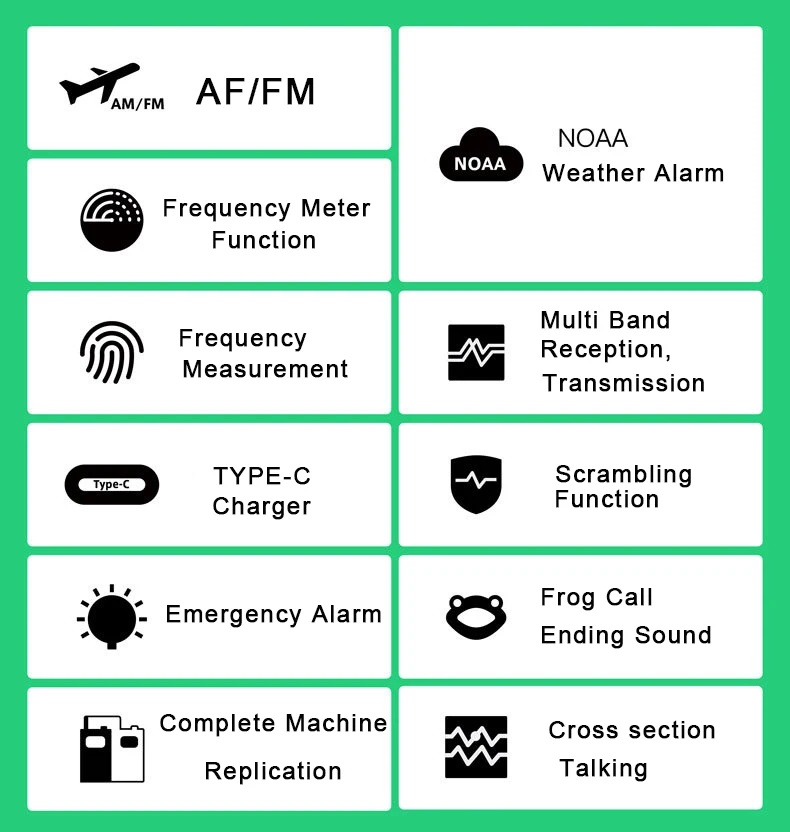
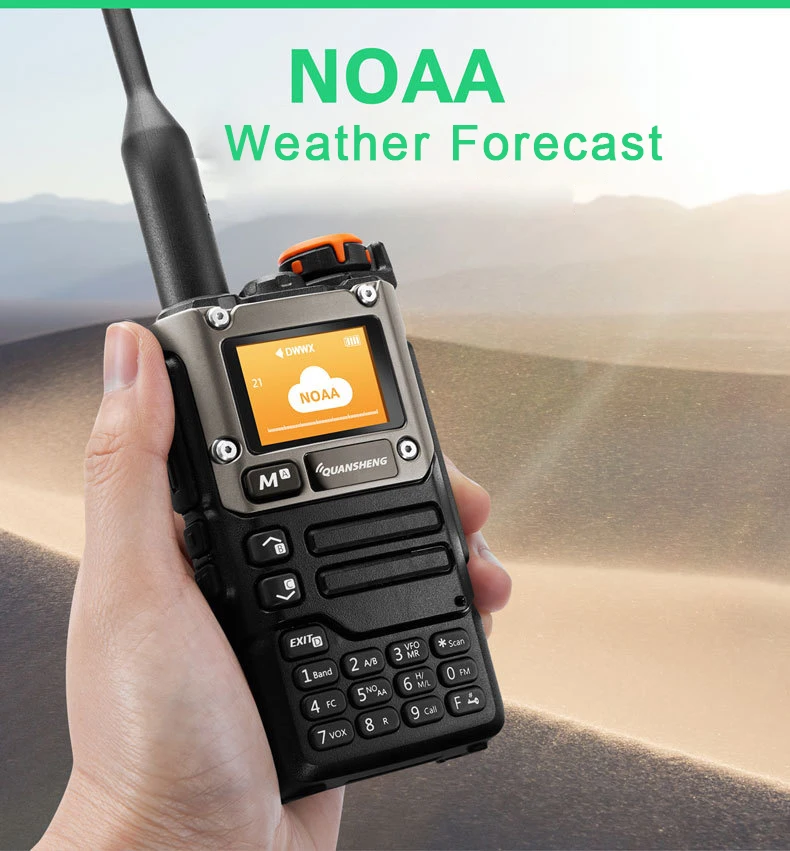
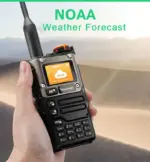
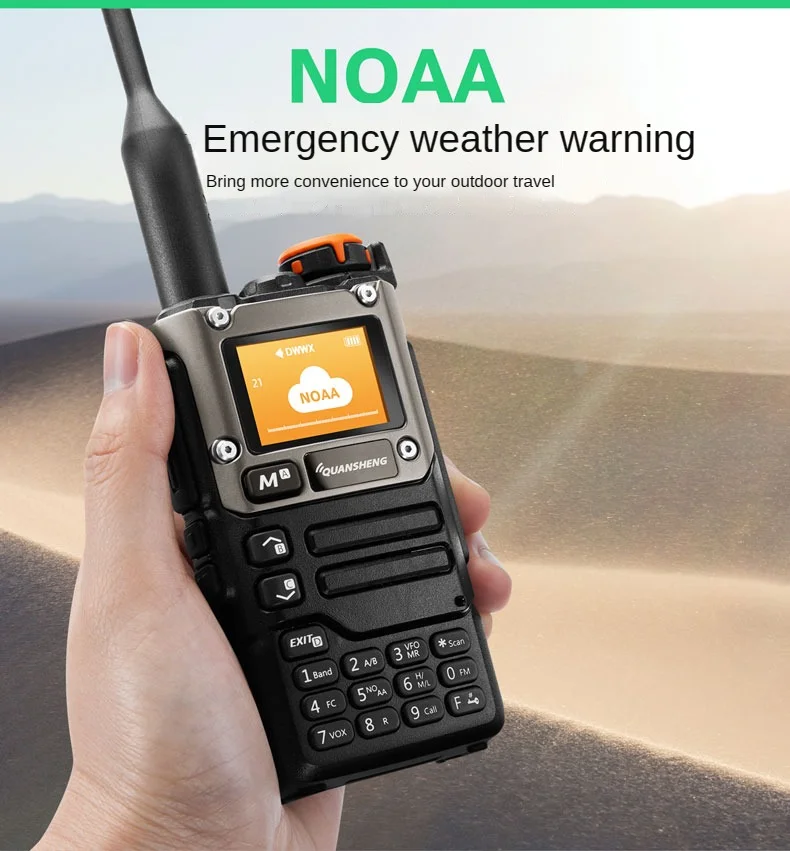
NOAA weather reception |
25: |
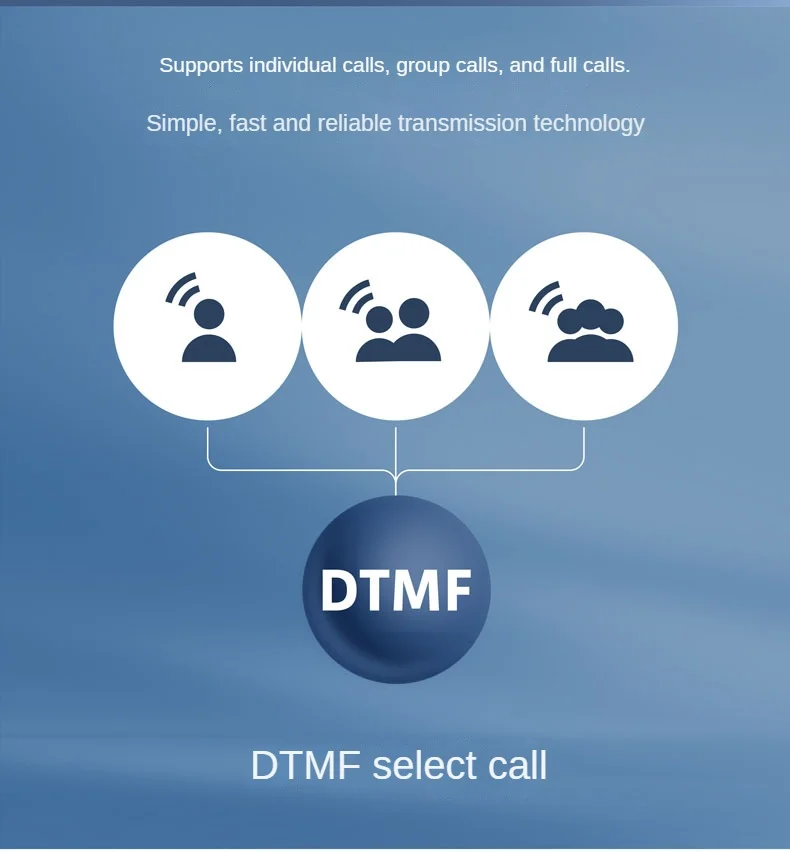
DTMF |
|
Fast linking |
26: |
DTMF ANI |
|
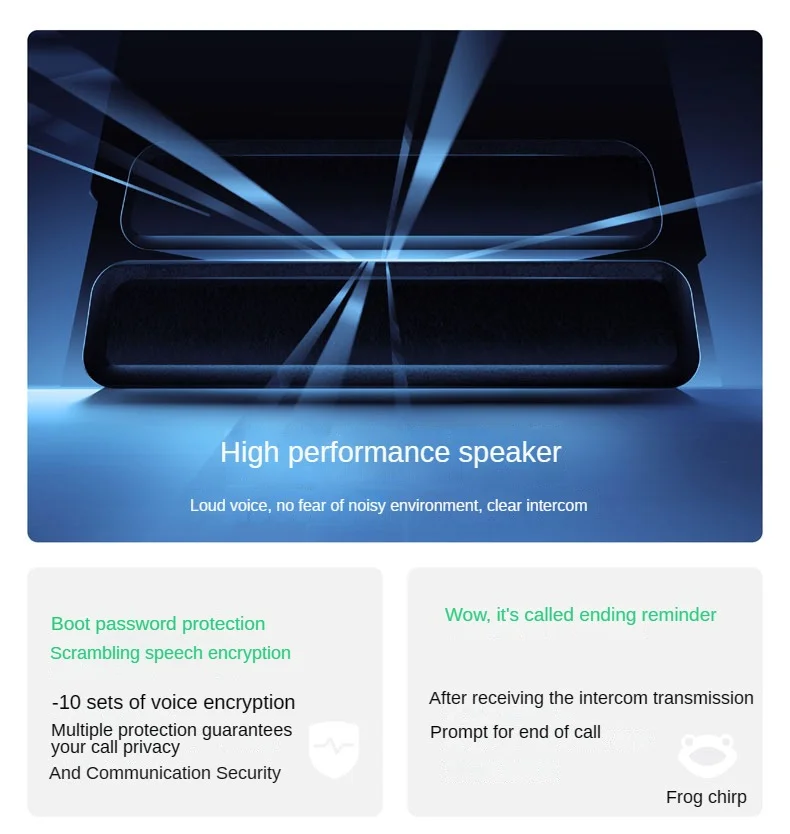
10 groups of voice encryption (scrambling) |
27: |
High, medium and low power options |
|
Large capacity battery/long standby time |
28: |
Receive and transmit signaling are set separately |
|
Lighting function |
29: |
Multiple step frequencies |
|
Reverse frequency operation function |
30: |
Initialize the settings |
|
Timeout timer |
31: |
Channel storage |
|
Transmits 1750 signals |
32: |
Computer programmable |
|
Frequency, channel mode conversion |
33: |
Tone switch |
|
200 channels |
34: |
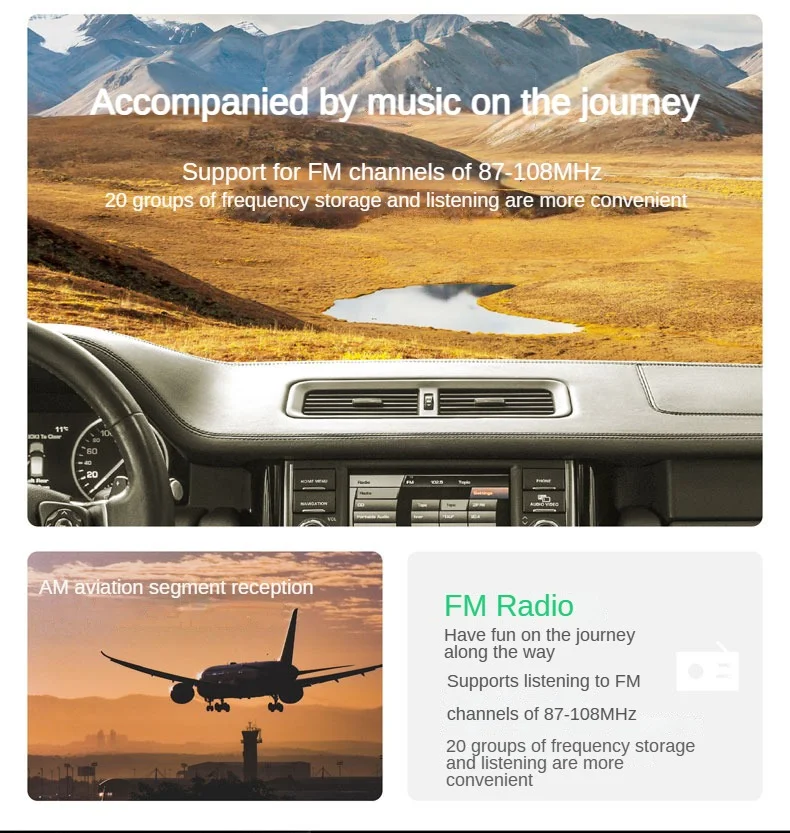
AM/FM air segment reception |
|
Voice telegram |
35: |
FM radio |
|
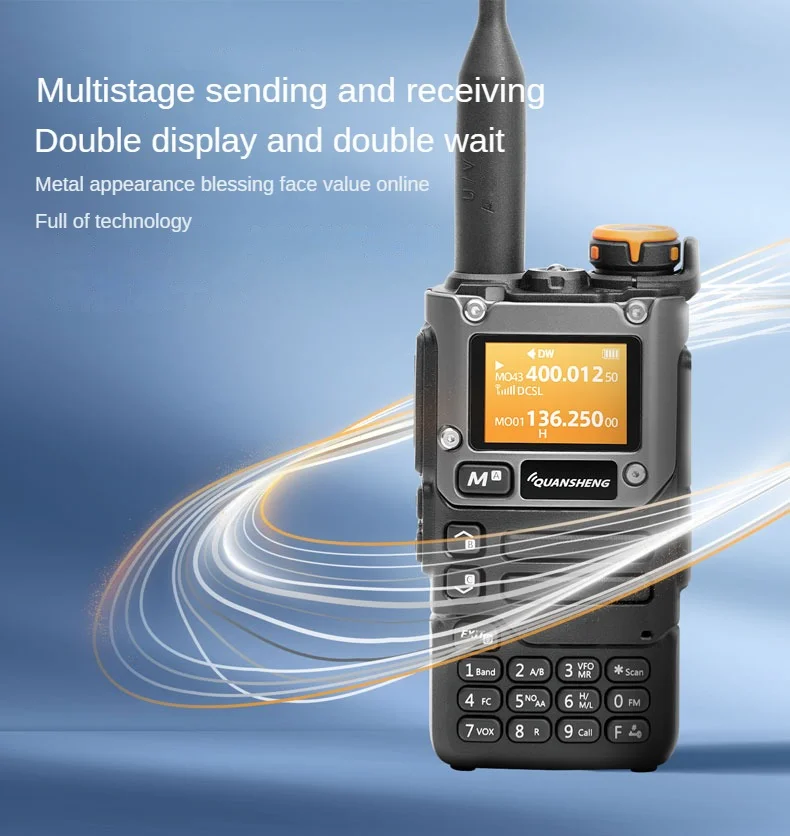
Multi-segment transmit and receive |
36: |
Digital signaling CTCSS/DCS |
|
Automatic/manual emergency alarm |
37: |
TYPE-C and mount |
|
Multiple scans |
38: |
VOX voice-activated emission function |
|
Difference frequency direction setting |
39: |
Automatic signaling search |
|
Difference frequency setting |
40: |
Busy and banned |
|
Wide and narrow band options |
41: |
Channel number, channel frequency, channel name Multiple display methods |
|
Squelch level setting |
42: |
Channel scan added |
|
Keypad lock |
43: |
Large screen dot matrix LCD display |
|
The backlight automatically turns off the selection time |
44: |
Transit desk forwarding confirmation function |
|
Cross-segment intercom function |
45: |
Boot password protection |
|
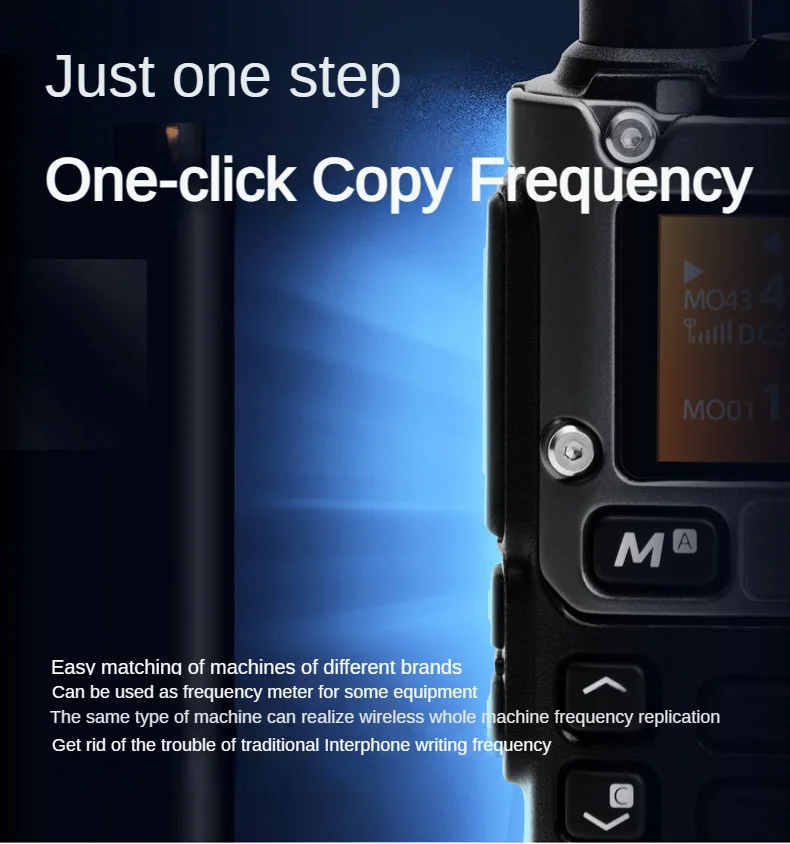
Wireless full machine replication |
46: |
Frequency meter function |
|
DTMF dialing |
47: |
That is, the call channel |
|
On-site programming |
||
|
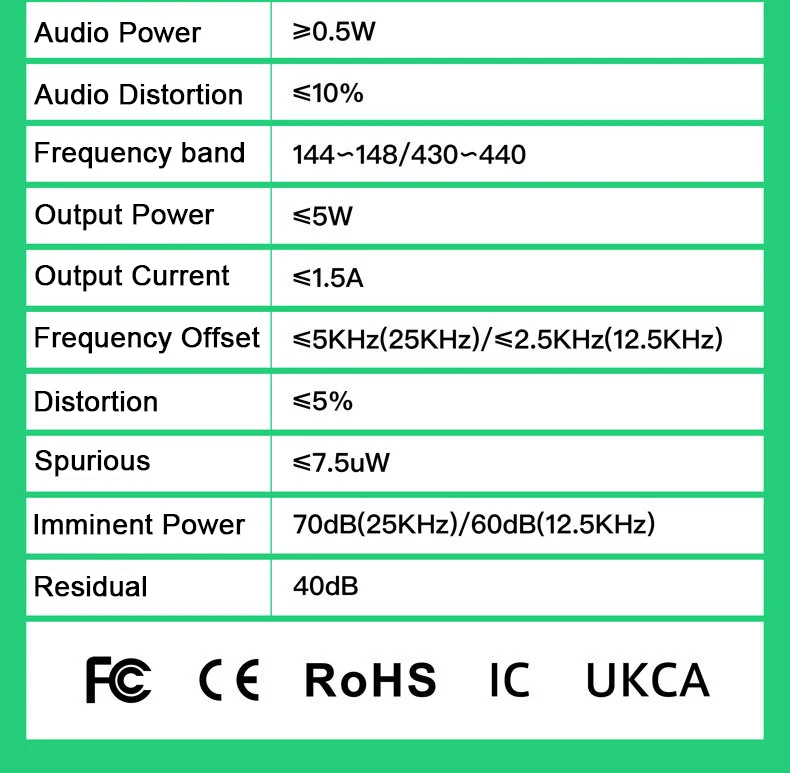
General specifications |
|||||
|
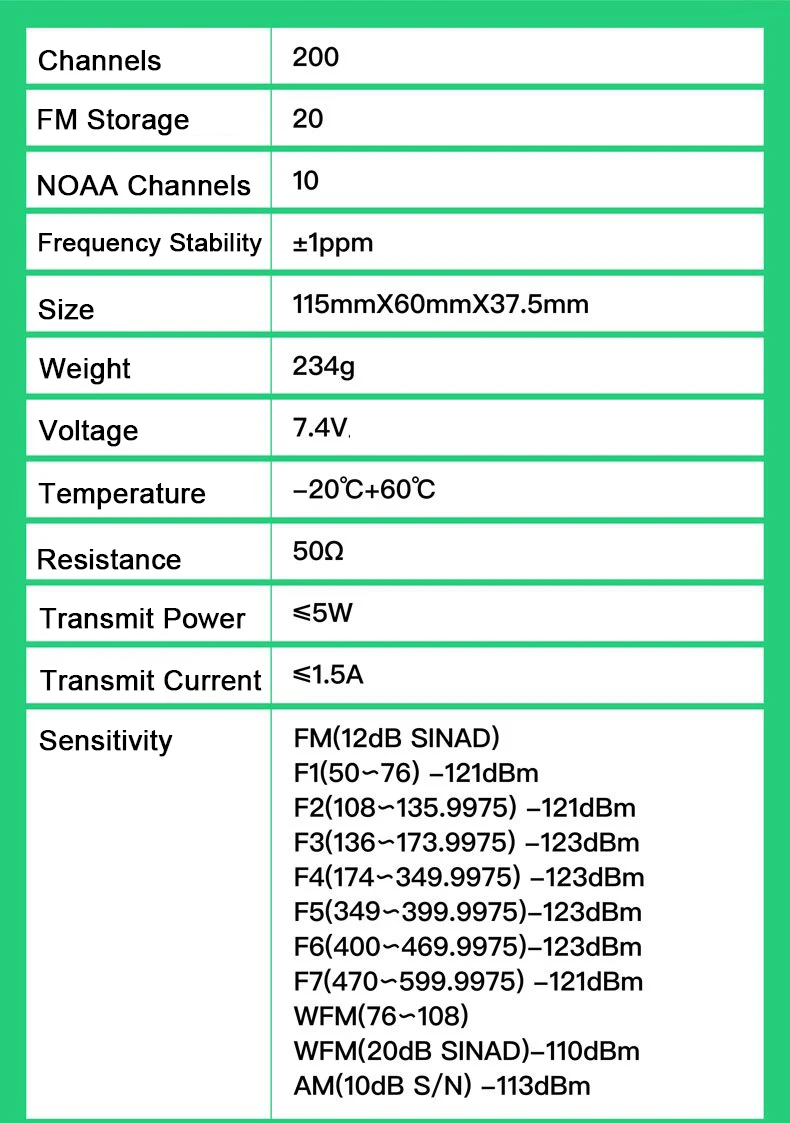
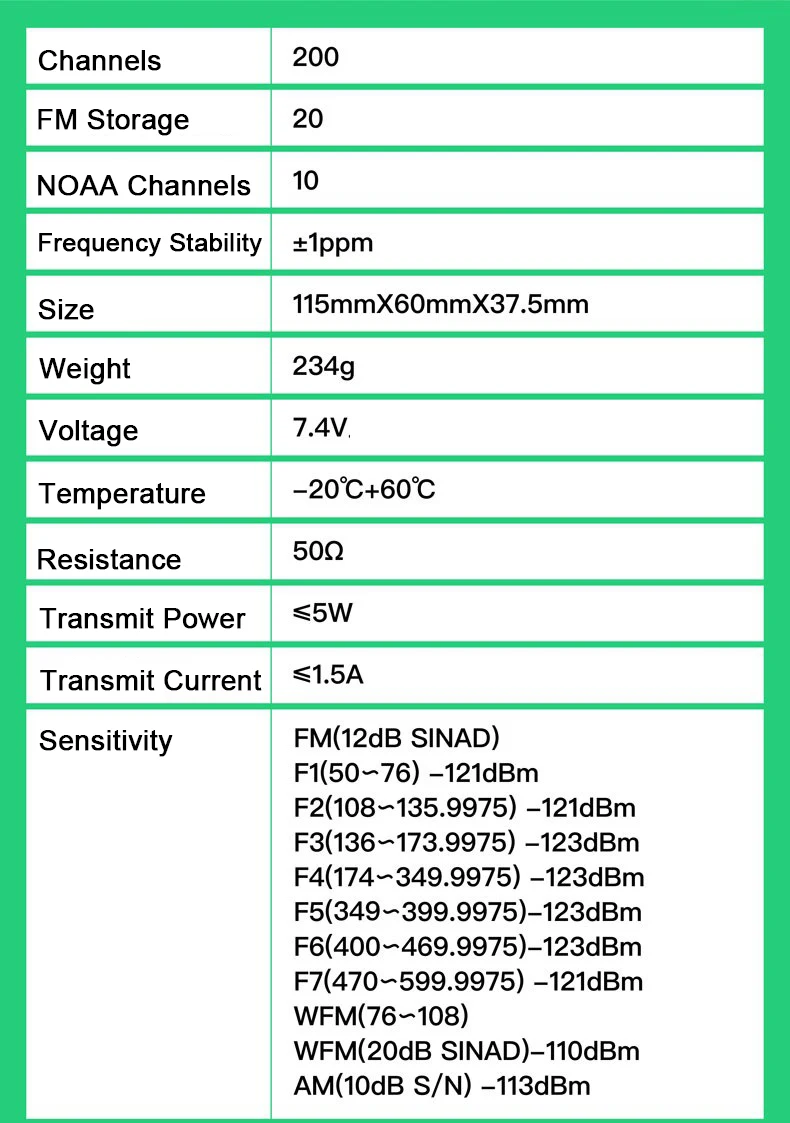
Signal channel |
: |
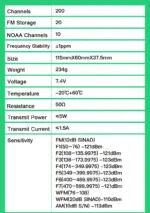
200 |
Audio power |
: |
≥0.5W |
|
Number of FM radios stored |
: |
20 |
Audio distortion |
: |
≤10% |
|
Frequency stability |
: |
±1ppm |
launch |
||
|
Size |
: |
115mmX60mmX37.5mm |
Band |
: |
144∽146MHz430∽440MHz |
|
weight |
: |
234g |
Transmit power |
: |
4W |
|
Operating temperature |
: |
-20℃+60℃ |
Transmit current |
: |
≤1.5A |
|
Antenna impedance |
: |
50 euros |
Maximum frequency offset |
: |
≤5KHz(25KHz),≤2.5KHz(12.5KHz) |
|
Modulation mode |
: |
FM:11KOF3E(12.5KHz),16K0F3E(25KHz) |
Modulation distortion |
: |
≤5% |
|
NOAA channel number |
: |
10 |
Stray components |
: |
≤7.5uW |
|
Battery capacity |
: |
1600mAh |
Frontage power |
: |
70dB(25KHz),60dB(12.5KHz) |
|
reception |
: |
Residual modulation |
: |
40dB |
|
|
Reference sensitivity |
: |
FM(12dB SINAD) F1(50∽76) -121dBm F2(108∽135.9975) -121dBm F3(136∽173.9975) -123dBm F4(174∽349.9975) -123dBm F5(350∽399.9975) -123dBm F6(400∽469.9975) -123dBm F6(470∽599.9975) – 121dBm WFM(20dB SINAD) WFM(76∽108) -110dBm AM(10dB S/N) F2(108∽135.9975) -113dBm |

|
Intercom precautions |
|
|
1: |
Before using the walkie-talkie, make sure that the battery or rechargeable battery is properly installed. |
|
2: |
Before using the walkie-talkie, familiarize yourself with its functions and operation methods. |
|
3: |
Follow the walkie-talkie’s guidelines and safety regulations. |
|
4: |
When using a walkie-talkie, make sure your voice is clear and easy to understand. |
|
5: |
When you are not using the walkie-talkie, turn it off to save battery life. |
|
6: |
Avoid exposing the walkie-talkie to heat, humidity, or extreme cold. |
|
7: |
Avoid using walkie-talkies while using other electronic devices such as cell phones or radios. |
|
8: |
Avoid using powerful electronic devices or sources of radio interference near walkie-talkies. |
|
9: |
When using walkie-talkies, observe local regulations and regulations, including radio frequencies and usage restrictions. |
|
10: |
When using the walkie-talkie, please respect the privacy and safety of others. |
|
11: |
For more precautions and recommendations on the use of walkie-talkies, you can look up the walkie-talkie manufacturer’s website or online forum. |
|
12: |
If the walkie-talkie needs to be used in a high-temperature environment, make sure it has adequate ventilation to prevent overheating. |
|
13: |
Avoid exposing the walkie-talkie to extremely low temperatures, as low temperatures can damage batteries and electronics, causing the walkie-talkie to malfunction. |
|
14: |
If the walkie-talkie needs to be used in an extremely low temperature environment, make sure it has adequate protection to prevent freezing and damage. |
|
15: |
When using the walkie-talkie, follow the manufacturer’s temperature limits and recommendations. |
|
16: |
Follow the walkie-talkie’s usage guidelines and safety regulations to ensure proper use and maintenance of the walkie-talkie. |
|
17: |
Avoid using other electronic devices or sources of radio interference near the walkie-talkie to prevent interference and damage to the walkie-talkie. |
|
18: |
When using the walkie-talkie, be aware of your surroundings to ensure your safety and the safety of others. |
|
19: |
Comply with local regulations and regulations, including radio frequency and usage restrictions. |
|
20: |
If there is any abnormality in the walkie-talkie, please stop using it immediately and contact the manufacturer or professional technicians for inspection and repair. |
 Gold
Gold
 Silver
 Graphite
 Pacific Blue
 Random color
 128GB Black
 128GB Blue
 128GB White
 64GB Black
 64GB Blue
 64GB White

 black
black
 blue
blue
 Purple
 Red
Red
 WHITE
WHITE
 black
black
 Blue
Blue
 Purple
 red
red
 white
white
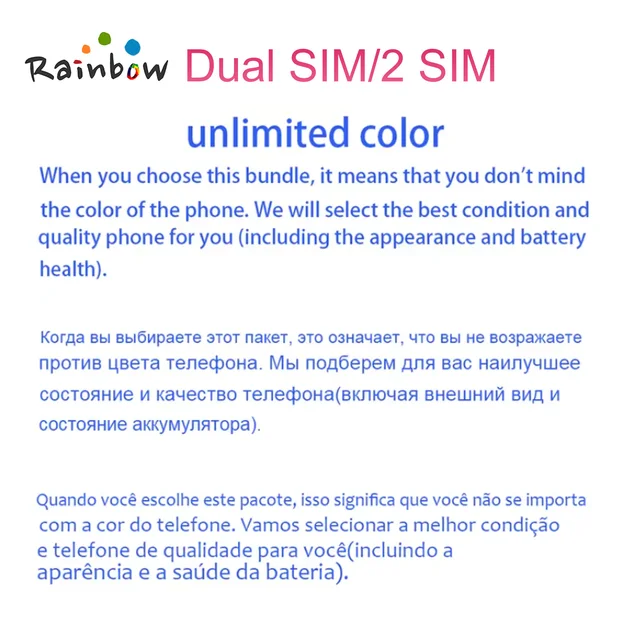 Unlimited color

 black
black
 Blue
Blue
 pink
pink
 red
red
 white
white
No account yet?
Create an Account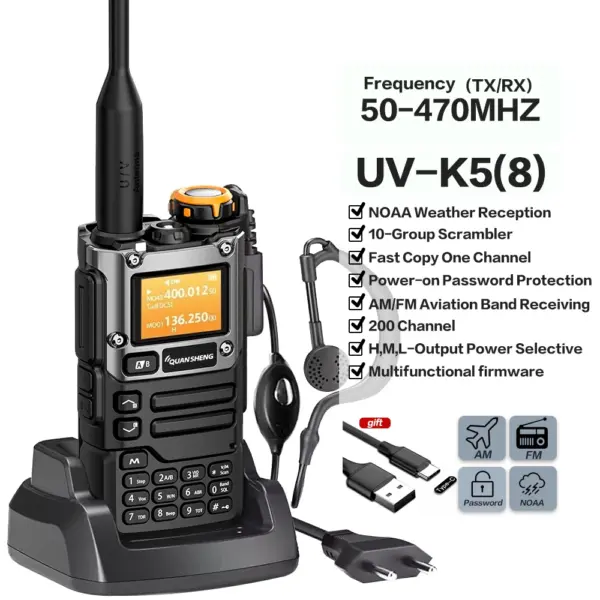




Reviews
Clear filtersThere are no reviews yet.